
2026-05-18
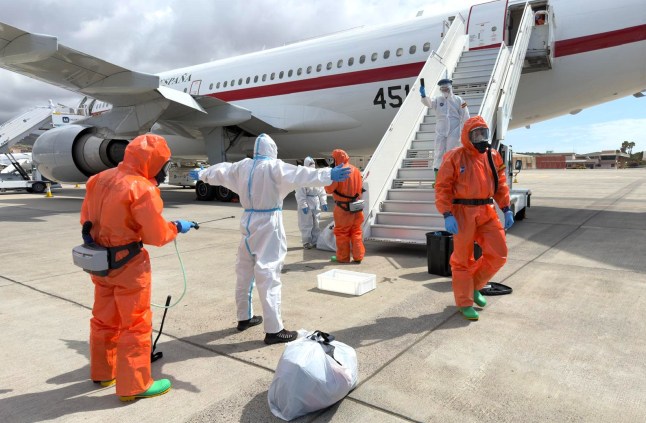
A passenger is sprayed after disembarking from the hantavirus-stricken cruise ship MV Hondius
(Credits: AP)
A British man has been detained in a bar despite being under hantavirus quarantine orders in Italy.
The man,who is in his 60s,and his travelling companion were apprehended in Milan and then taken to Sacco Hospital.
The pair were told they must remain in quarantine until June 6 as part of a 42-day isolation period.
The man had been on the same flight as Mirjam Schilperoord,69,who died after flying from St Helena to Johannesburg when she contracted the virus.
She was the wife of the first man to die,Leo,70,who boarded the MV Hondius and went birdwatching at a rubbish tip on a remote Argentinian island.
@metrouk People evacuated off the Hantavirus cruise ship have been advised to self-isolate for 42 days. Globally,the World Health Organization has recommended ‘active follow-up’ which includes daily checks for symptoms like fever and muscle aches. Experts are reiterating that transmission is rare and this should not be treated like covid. #hantavirus #worldhealthorganization #worldnews
♬ Everything In Its Right Place – SAD
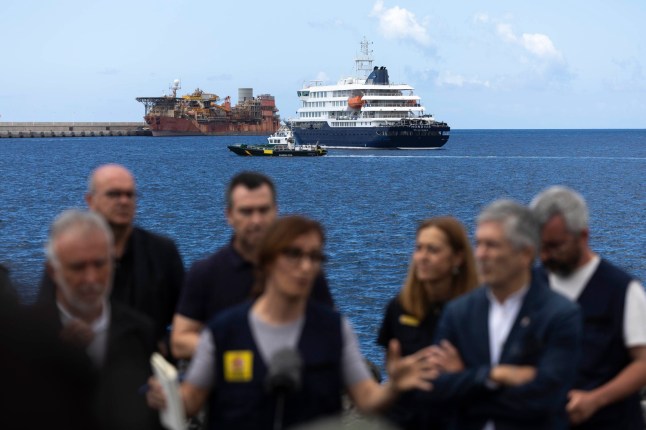 MV Hondius is seen while Spain’s Minister provide updates on the evacuation (Picture: EPA)
Prefer us to the others? Then tell Google!
As a loyal Metro reader,we want to make sure you never miss our stories when searching for your news. Whether it is the latest politics news explained,live football coverage or a showbiz scoop.
Click the button below and tick Metro.co.uk to ensure you see stories from us first in Google Search.
Add us as a Preferred Source

Our journalists work hard to deliver the most important stories from around the world
But he told a press conference in Madrid: ‘Of course,the situation could change.
‘And given the long incubation period of the virus,it’s possible we might see more cases in the coming weeks.’
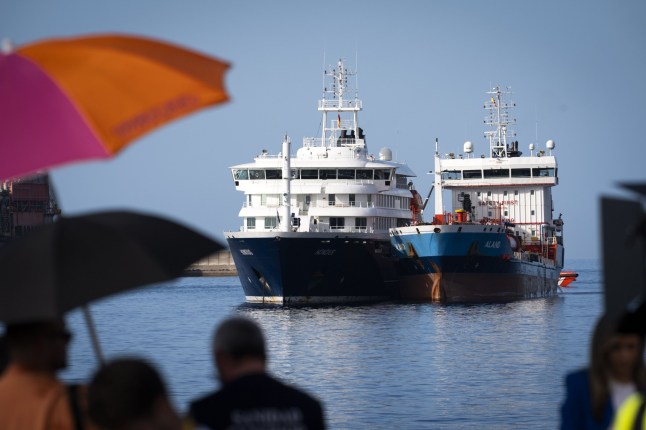
The MV Hondius has only a few crew and medical workers onboard now (Picture: ANP/Shutterstock)
Despite years of research,many questions have yet to be answered about the hantavirus,including exactly how it spreads,how long it can survive outside a host and why it can be mild for some people and severe for others.
There is no specific treatment or cure,but early medical attention can increase the chance of survival. The Andes virus implicated in the cruise ship outbreak can have an incubation period of up to eight weeks and a mortality rate of up to 50%,according to the World Health Organization.
The virus usually spreads from rodent droppings and is not easily transmitted between people,though the Andes virus may be able to spread between people in rare cases.
What is hantavirus?
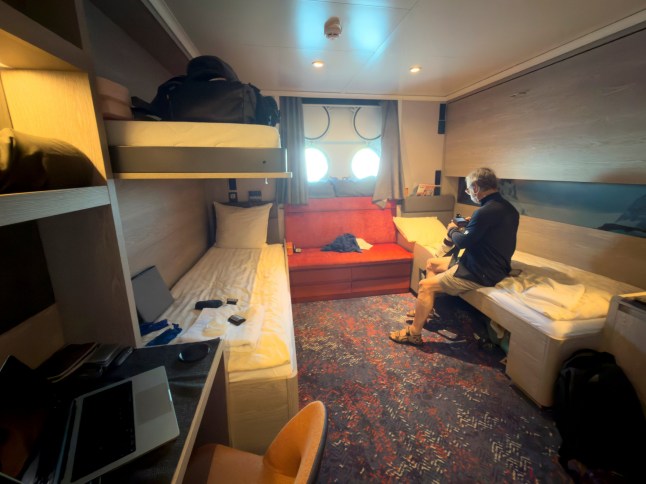
A cabin inside the MV Hondius,during the voyage to Spain’s port of Tenerife (Picture: AP)
Hantavirus,sometimes called the ‘rat virus’,is a rare family of pathogens carried by rodents – there is no vaccine or cure.
The virus spreads through contact with the faeces,urine and saliva of infected rodents.
Early symptoms can be easily mistaken for the flu,such as fever,chills or body aches,but can escalate to heart or lung failure.
At the centre of the cruise outbreak is the Andes strain,which is endemic to South America,including Argentina,where the ship departed on April 1.
Dr Stathis Giotis,a lecturer in life sciences at the University of Essex, told Metro that the Andes hantavirus is the only known strain that can be spread from human to human,though cases of this are few and far between.
‘It is clearly a serious situation for those directly affected and it deserves careful public health follow-up,but there is no evidence at present that this represents a broader epidemic threat,’ he said.
People who may get in contact with rat droppings,like agricultural workers or people simply cleaning their sheds,are at high risk.
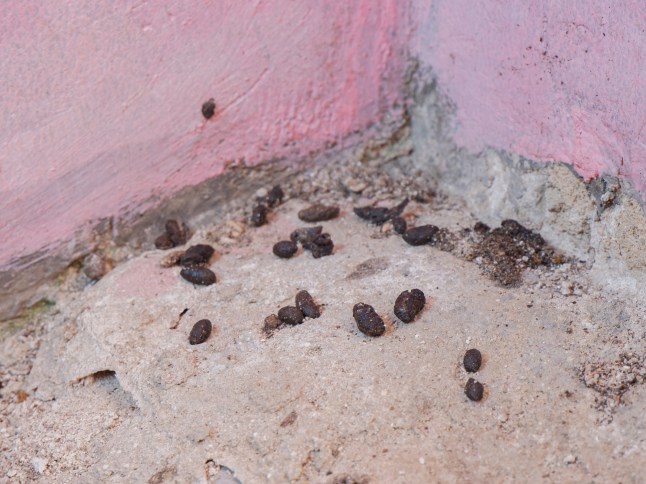
Rat droppings look like this and can carry hantavirus (Picture: Getty Images)
The genome of the hantavirus has been completely sequenced,the European Centre for Disease Prevention and Control said Wednesday.
‘There is no data to suggest that this virus is behaving differently in terms of transmissibility or severity from any of the known virus circulating in certain regions of the world,’ said Andreas Hoefer,who oversees the operational coordination of the European Union’s reference laboratories for public health.
‘Based on that data,I would say that currently we have no reason to suspect that this is a new virus’.
